A negotiation is more than just a discussion; it’s a way to find a resolution that satisfies all parties involved. However, negotiations rarely result in everyone getting exactly what they want. To be a successful negotiator, you need to be able to create value for yourself while ensuring that the other party feels satisfied as well.
In the world of business, negotiations can take various forms, such as discussing costs with suppliers, closing a sale, determining contract terms, seeking a promotion or salary increase, or requesting a budget allocation for a project. Regardless of the context, approaching negotiations without a strategy is likely to lead to disappointment.
To help you prepare for future negotiations, here are four strategies that can increase your chances of success:
4 Steps of Negotiation in Business
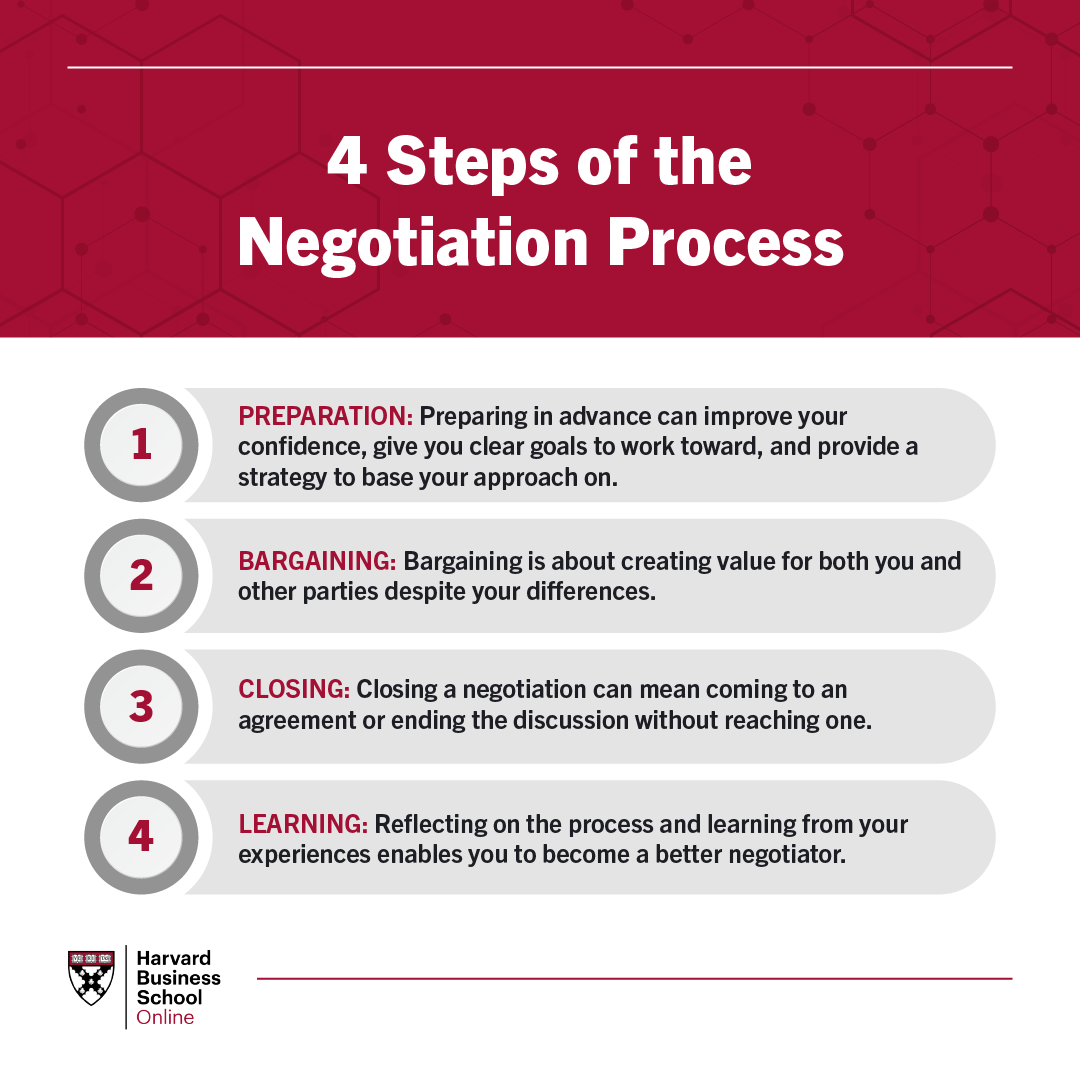
1. Preparation
Before entering a negotiation, it’s crucial to define your Zone of Possible Agreement (ZOPA), Best Alternative to a Negotiated Agreement (BATNA), Walkaway point, and Stretch goal. Understanding your own position allows you to strategize effectively and make emotionally intelligent choices. It’s also important to consider your counterpart’s perspective and anticipate their motivations and goals.
2. Bargaining
The bargaining stage is where the negotiation takes place. It’s about finding common ground and creating value for both parties, despite their differences. Look for opportunities to claim the value that you need while still ensuring that the other party benefits as well. This stage requires careful navigation and the ability to find a win-win solution.
3. Closing
The way a negotiation closes depends on each person’s motivations, requirements, and goals. It can either result in reaching an agreement or ending without one. It’s crucial to consider the relationship you have built throughout the discussion and make sure that the closing aligns with everyone’s expectations.
4. Learning from Your Experience
After the negotiation is over, take the time to reflect on the experience. Identify what went well, what didn’t, and how you can improve for future negotiations. This self-reflection helps you identify your strengths and weaknesses as a negotiator, allowing you to sharpen your skills.
4 Examples of Business Negotiation Strategies
1. Define the Interaction by Showing Your Cards
How you approach a negotiation defines its nature and can set the stage for success or failure. Harvard Business School Professor Michael Wheeler suggests thinking about negotiation as an opportunity to solve a problem together. By showing your motivations and goals to an appropriate extent, you can build trust and create a shared goal of value creation.
2. Make the First Offer, and Aim High
Contrary to popular belief, making the first offer is not a sign of weakness. It allows you to set the stage and define the range of possibilities. However, it’s important to consider the other party’s goals and aim for an offer that provides value for both sides. The higher your aspirations, the more value you are likely to get, but be careful not to set an offer that ends the discussion prematurely.
3. Don’t Raise Demands
Consider whether raising your demands during the negotiation is a viable strategy. Starting with small requests that the other party is likely to agree to allows them to make concessions. However, be aware that this approach may undermine trust if your counterpart believes that your requests are not final. It’s crucial to strike a balance between making reasonable requests and maintaining trust throughout the negotiation.
4. End the Discussion Genuinely
If building a long-term relationship with your counterpart is important, ending the negotiation on a genuine note is crucial. Avoid using deception or making last-minute demands that may erode trust and harm the relationship. By closing genuinely, you maintain rapport and create a foundation for future negotiations.
Sharpening Your Negotiation Skills
The strategies you employ will depend on the specific scenario, the nature of the relationship with the other party, and the desired outcome. Preparation, improvisation, and practice are key to becoming a successful negotiator. Consider taking an online negotiation course to gain the skills and confidence needed to navigate the unpredictable world of negotiations.
Are you ready to improve your negotiation skills and advance your career? Explore Negotiation Mastery—one of our online leadership and management courses—and download our free leadership e-book.